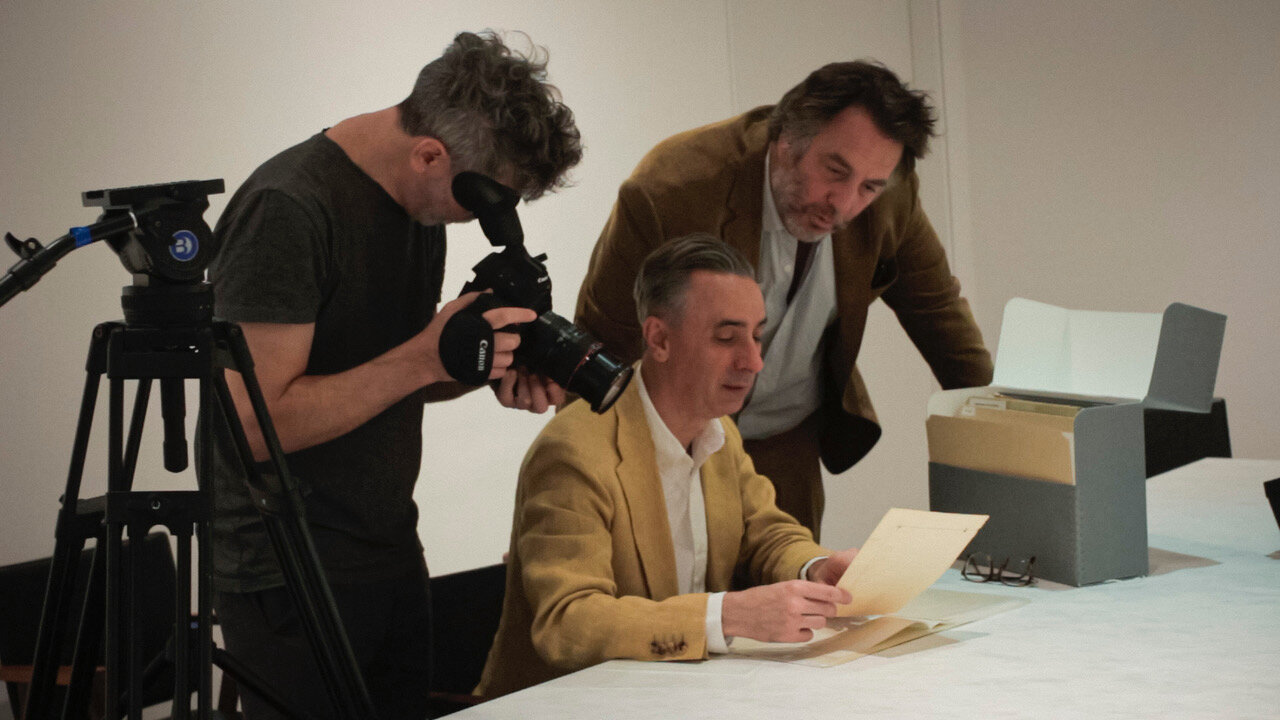
Life of Jorge Luis Borges (Mariano Llinás, 2026).
Words mean things, but that meaning is always changing. Sometimes those changes are organic, a gradual movement that is driven by the changing needs of speakers. But sometimes those changes are engineered from above, to serve the needs of those in power. After years of algorithmic censorship, we now see words like “unalive” or “le$bean” replacing their antecedents even in conversation, even if only ironically. (As if to prove the point, the plot of the new film by Denis Côté, Nobody’s Violence, manages to hinge on the issue of assisted suicide without ever uttering the s-word. It’s as if the film anticipates the language that will be deleted from many online reviews.) It is an embarrassing cliche to describe an authoritarian gesture as Orwellian, but using technology to eliminate words and concepts from our consciousness cannot really be described in any other way.
The word “memory” has undergone a significant shift over the past twenty years. Do you remember memory? More often than not, people now use the word to describe the capacity for digital storage, not the human ability to recall people, things, and events. This evolution seems quite deliberate. Virtually every innovation by Big Tech works to externalize the memory of the world, to delete it from our brains and store it somewhere where it can always be erased, should it become troublesome. Tools for convenience, when designed for the profit of the few, inculcate habits that dull our minds. But more than this, the offloading of consciousness onto the digital realm sets the stage for whole-cloth revisionism. Digital knowledge does leave a trace, a footprint deep in the code, but it is legible only to a select few. But it isn’t a palimpsest. A fully digital archive lacks reminders, the partial erasures and strikethroughs and overwriting, that one finds in physical culture, as well as in our memories. Instead, it allows for a wholesale find/replace function – instantaneous, possibly permanent change. (One man can rename a body of water for petty, jingoistic reasons, and suddenly, there is it.)
So memory, if shared, is a site of resistance. But of course there are many different ways to externalize memory. Artwork is one such way. It allows humans to memorialize facts and objects, thoughts, and experiences that are inconvenient, to actively prevent erasure and to share evidence among and between human minds, away from the top-down imperatives of late capitalist meaning-making. In this sense, an artwork can serve as an alternative archive, collating histories and ideas for preservation. Artworks often exist within institutions, which include museums and film festivals like the Toronto International Film Festival (TIFF). These institutions sometimes gatekeep, but crucially they also preserve. In addition to preserving individual art objects, they can also make space, preserving the very possibility for sustained attention. Right-wing strategist and former filmmaker Steve Bannon has described the need for reactionary political actors to “flood the zone,” to bombard the populace with more information, and more horror, than it is possible to mentally assimilate. This is a process that militates against memory by fragmenting attention. But artworks have a unique ability to focus our attention, to create a clearing for analysis and understanding. Art can be higher ground, a beachhead from which to establish new tactics.
In recent years, many experimental film works have exhibited an archival impulse. This has taken different forms, including the documentary exploration of archival processes, as seen in Jessica Sarah Rinland’s films, or the exploration of personal histories as a form of material culture, something we find in films as diverse as Payal Kapadia’s A Night of Knowing Nothing (2021), Sophy Romvari’s Still Processing (2020), and the work of British-Nigerian artist Onyeka Igwe. And of course Chronovisor (all films 2026 unless otherwise mentioned), one of the year’s most fascinating films, is about the research process, the accumulation of clues from old documents and dusty tomes, as a way to present contra-power histories that may have been hiding in plain sight.
Wavelengths, TIFF’s programming section for unconventional, artist-driven filmmaking, has long been an oasis for what Scott MacDonald has called “a critical cinema,” works that interrogate social structures as well as the conditions of their own making. In a variety of ways, many of the films presented in TIFF’s 2026 Wavelengths edition engage with the question of memory and the archive. Some of them, like Mariano Llinás’s brilliant, sprawling biography of Jorge Luis Borges, are in part about the process of delving into the archives and unearthing meanings that can only be derived from material history. Much of Life of Jorge Luis Borges (all titles 2026 unless otherwise noted) consists of Llinás and literary scholar Ernesto Montequín examining manuscripts and ephemera in order to piece together exactly how Borges became a transformative figure in world literature. In addition to traveling to places that were significant in Borges’s development—a library, a café, a hotel, a city block—we see the two men comparing artifacts to the descriptions of them that Borges wrote in his work. A children’s book with drawings of tigers (not by Borges, alas), or a literary magazine with a jade-green cover (alluded to in the story contained therein), and dozens of handwritten drafts are all rigorously examined, as Llinás films Montequín’s excitement as if they were making an unboxing video for YouTube. The Borges papers exemplify the seductions of the archive, showing that no matter how well you know a given subject, it is always possible to be surprised and amazed.
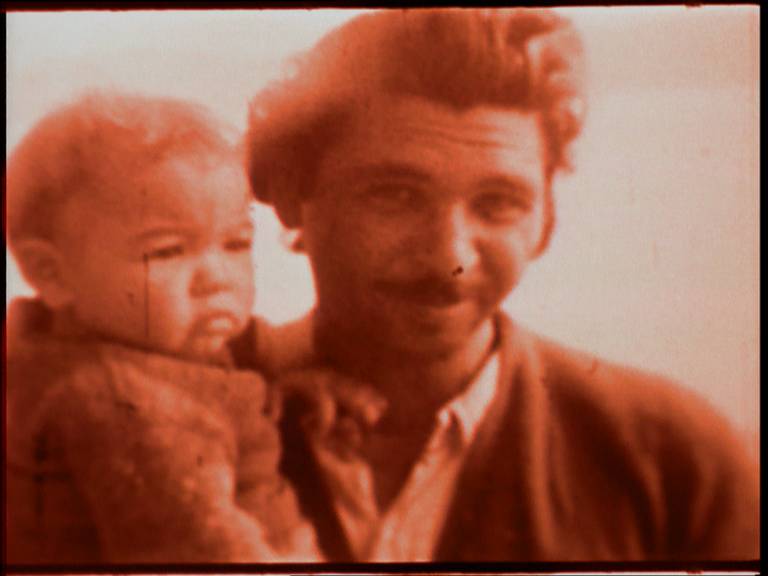
Electric Fragments No. 1: Rom (Uomini) (Yervant Gianikian & Angela Ricci Lucchi, 2001).
While some archival records augment and amend our knowledge of figures we already know quite well, others stand as evidence of otherwise ordinary lives. The commitment to archival exploration as a means of historical retrieval is seen most vividly in Electric Fragments No. 1: Rom (Uomini) (2001) by the late filmmaking team of Yervant Gianikian (who passed away this July) and Angela Ricci Lucchi (who died in 2018). Rom (Uomini) is one of a series of short films that exemplify the couple’s filmmaking ethos. They collected home movies, official government films, and other cinematic marginalia in order to consider the cultural history and ideologies contained therein. Their method could scarcely be simpler: present the film as-is, apart from slowing it down, tinting it, and adding an unobtrusive soundtrack.
As opposed to numbers two and three in the Electric Fragments series (which deal with colonialism in Vietnam and the covert sexualization of women in public, respectively), Rom (Uomini) is gentle and offers the viewer lowkey revelations from a not-so-distant past. It is taken from home movies shot in a Romani camp in Italy, and as the subtitle tells us, we are simply watching human beings: a family playing around outside, acting silly, and loving each other. One refrain in the film is the image of a baby sleeping on the ground, and a man, presumably the child’s father, placing his fedora over the baby’s face to shield them from light and noise. Gianikian and Ricci Lucchi understand that this footage is both unremarkable and priceless, probably one of the only extant records that these people and their community ever existed. It is to the great credit of Wavelengths’ programmers, Jesse Cumming and Andréa Picard, that they showcase older, underseen films like this one, along with the TM, a lyrical 1974 work by Japanese Fluxus composer Takehisa Kusogi.
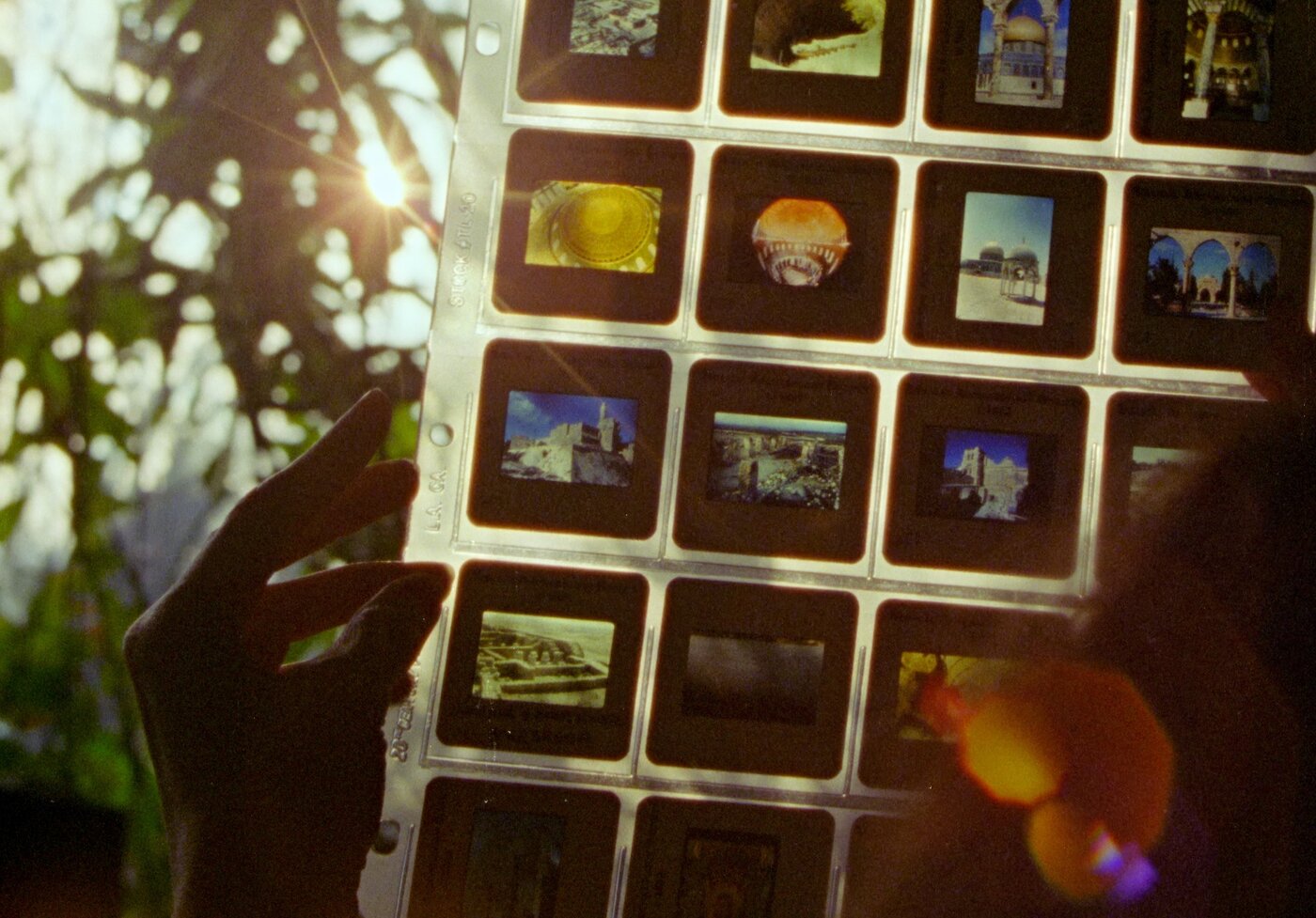
The Black Box Is Orange (Yuula Benivolski, 2026).
Among the other films playing in Wavelengths, the political potential of the archive is demonstrated most unequivocally in Yuula Benivolski’s debut feature, The Black Box Is Orange. Composed like an essay film but also incorporating diaristic elements, Black Box finds the Russian-born Canadian returning to her childhood of Shlomi, a rundown border town in Israel. Benivolski uses her own family photos along with official military images to articulate how Shlomi was built on the land that was once the Palestinian village of al-Bassa. The Israelis have done everything they can to erase al-Bassa, but its material existence persists, in disused railroad tracks, a concrete slab in a forest, and the continued existence of a building that has withstood decades of sustained ordnance.
In her own family photos, as well as images found in the archives of Israel’s Ministry of Defense, Benivokski compiles evidence of al-Bassa’s existence. Benivolski identifies a single home on a high hill, one she remembers from her childhood and that keeps appearing in both family snapshots and official military images. In a place where the landscape is constantly being destroyed and rebuilt in order to erase any traces of Palestinian life, this structure remains like a silent witness. In its combination of personal memory and official records, this chapter of the film, titled “The Little White House,” recalls the best work of Harun Farocki or the documentary work of Israeli filmmaker Amos Gitai.
“The Little White House” would be one of the year’s best films on its own. But Benivolski surrounds it with different kinds of discourse, with the viewer asked to consider how these registers of information bounce off one another. In one segment, Benivolski tells the story of a Palestinian family whose home is repeatedly raided. Handful by handful, the soldiers steal pictures from the family’s photo album, and Benivolski learns that the Israeli Ministry of Defense contains a massive archive of such stolen photos, classifying them according to their own internal categories. As we see a series of still images of Palestinians and Israelis going about their lives (which includes the frequent wearing of gas masks), Benivolski asks us to consider the dehumanization implicit in this disciplinary archive.
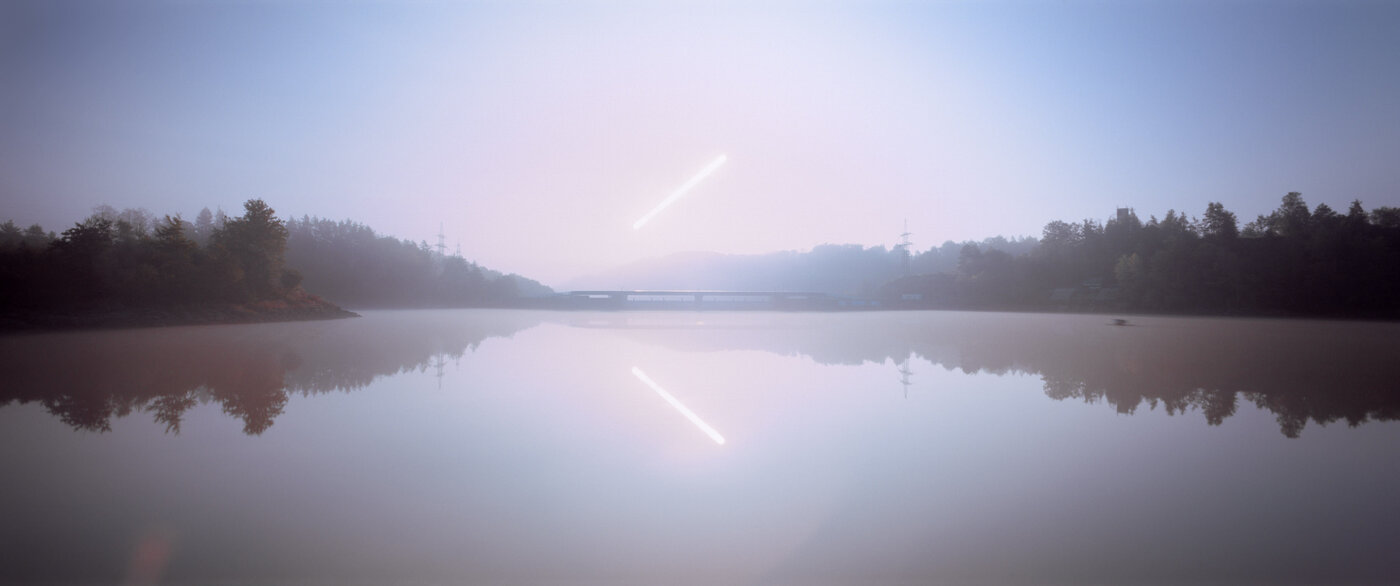
Forever...Forever (Johann Lurf, 2026).
While Belivolski’s film is explicitly political, there are, of course, more idiosyncratic forms of memory, ones in which the sociopolitical meanings remain implicit. Some films are less concerned with producing an objective record than in generating a visceral impact by looking at the world in unusual ways. Such films are records not of the thing itself, but the affective relationship between the filmmaker and their subject. In a sense, what is meant to be preserved is the experience of looking at a person, place, or thing. Johann Lurf’s hypnotic Forever…Forever is a record on one very specific place in Austria, the Ottenstein Reservoir in Austria. For this 20-minute film, Lurf shot footage from the exact same angle for nearly two years. There is a body of water in the foreground, a bridge over the water, and two shores covered in trees.
Forever…Forever is the type of film that could hypothetically be made anywhere. If you pay close enough attention to a given place for a long enough span of time, it is inevitable that changes will occur: changes in season, in light, in activity. But as Lurf demonstrates, the reservoir is a unique location. It represents an engineered space that contains water, an artificial construction in the landscape. From his chosen angle, Lurf fills most of the frame with water and the reflected sky. The bridge is dead center, like a bowtie holding the image together. Using time-lapse photography, Forever…Forever details the cycles of time as observed from this single spot. The sun rises, it sets, the moon comes out, and it sets in turn. The trees accumulate snow, their leaves change. Using an accelerating timeframe, as the timelapse increasingly condenses more time into fewer 65mm film frames, Lurf presents a document of what the naked eye cannot see. Much like Michael Snow’s La région centrale (1971) or certain films by the late Tomonari Nishikawa, Forever…Forever is a testament to deep observation. It shows us that any place participates in the general, cosmic movement of the planet while also maintaining its radical particularity.

The Address Book (Mustafa Uzuner, 2026).
Like Lurf’s film, two short films in the program pay close attention to very specific objects, suggesting the ways that people go about preserving cultural heritage against destruction. Mustafa Uzuner’s The Address Book is a simple film that shoots the pages of an address book, in order, one after the other. The method recalls Hollis Frampton’s filmed script Poetic Justice, or better yet Heinz Emigholz’s page-by-page presentation of his notebooks in the Basis of Make-Up series. The Address Book preserves a delicate object and offers it for display. Specific names and numbers tell us that the book’s owner is part of the New York art world, but when we learn that it belonged to Joseph Cornell, an additional layer of meaning emerges. Cornell, after all, exemplifies the artist as magpie, collecting and assembling nondescript bits of detritus and memorabilia in sculptural showcases. Uzuner’s film performs much the same function. Cornell was a filmmaker as well as a sculptor, composing his works using excerpts from science films, newsreels, and, in the case of his most famous film, Rose Hobart (1936), clips of the titular actress from her role in East of Borneo (1931). Uzuner combines these tendencies, “encasing” Cornell’s personal artifact on celluloid.
La Prospettiva (1653) (Ben Russell, 2026).
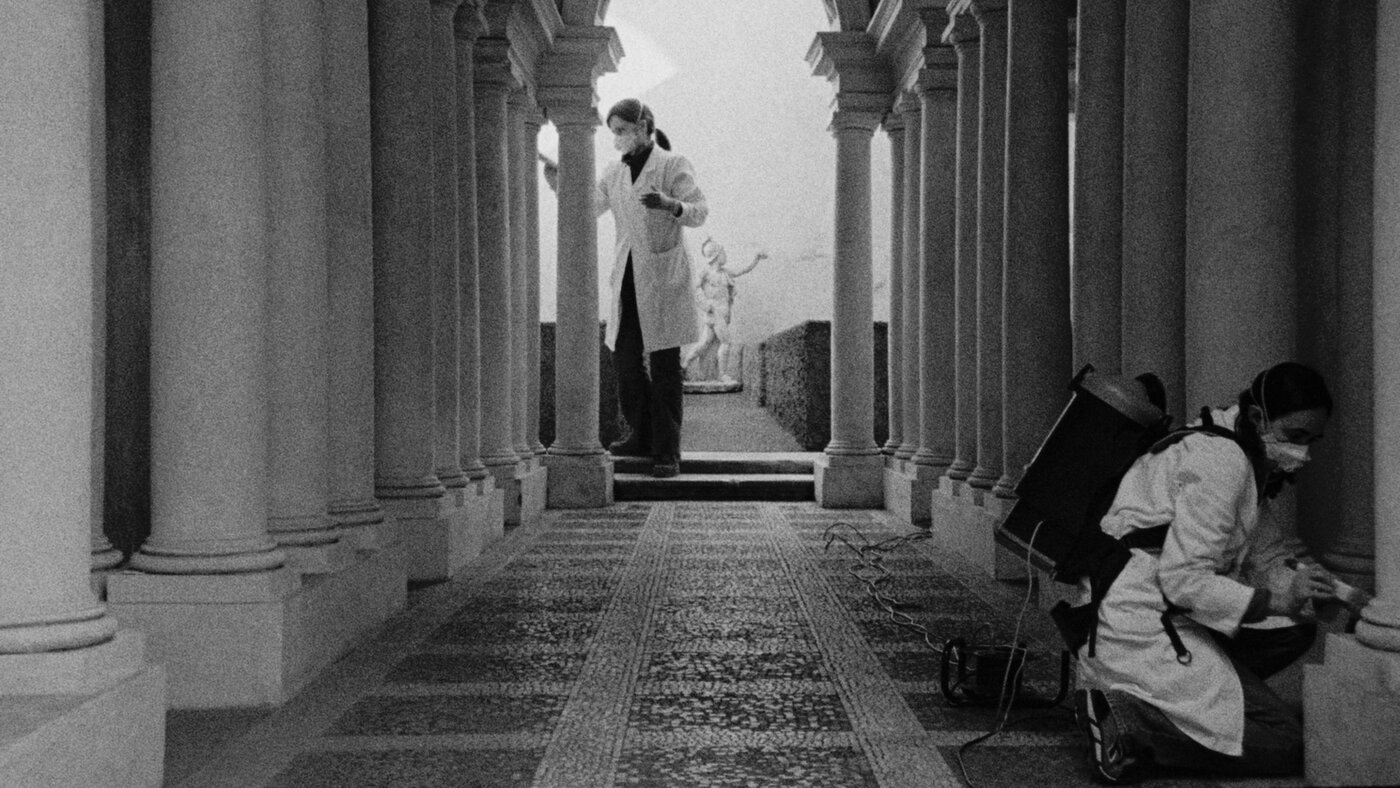
La Prospettiva (1653) by Ben Russell is a gentle observational recording of the process of physical preservation and upkeep. The film gazes down the length of the Colonnade at the Palazzo Spada in Rome, watching carefully as two workers clean the dust from its arch and walls. This is one of Russell’s simplest and most poetic films, recalling Friedl vom Gröller’s cinematic haikus of European life. Drawing on the vernacular of structural films like Serene Velocity (1970) and, indeed, Wavelength (1967), Russell optically takes us into the colonnade, turning the portico into a bounded yet infinite space.
As the title tells us, Russell is considering the way that Baroque space, designed by Borromini, plays tricks with our perception, tweaking the Albertian optics of the Renaissance and making the space less rational, more haptic and experiential.In a way, La Prospettiva forms an intriguing diptych with Russell’s other film from this year, Another Earth. That film is organized around a blitz of doomscrolling on an iPhone, imparting a sense of claustrophobia and despair. The phone, after all, takes all of human life and reduces it to the consumable optics that photography inherited from the Renaissance. By contrast, La Prospettiva tells us that certain things can endure for centuries, that the world contains great mysteries, provided there are people willing to care for them.
Ghazal-e Sorkh (Maryam Takafory, 2026).
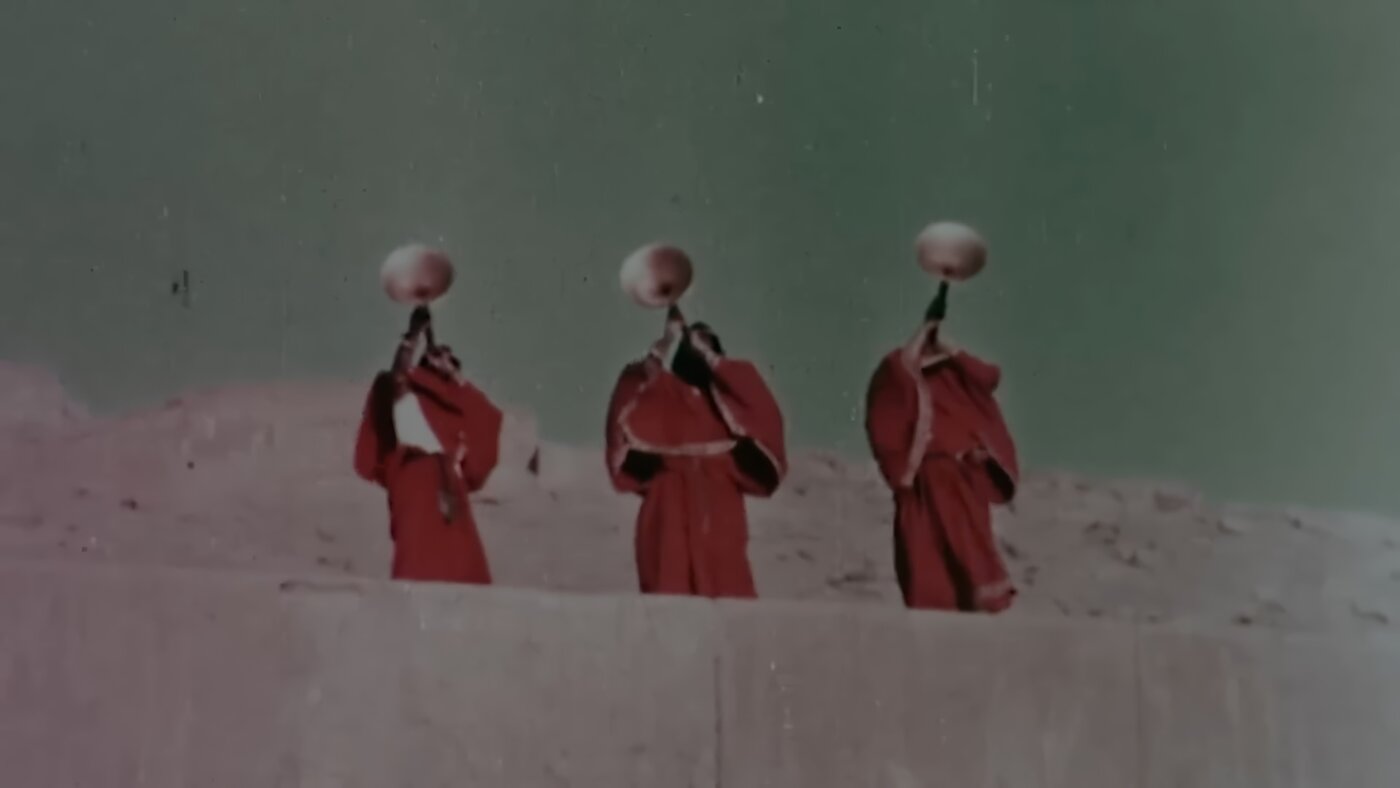
One of the festival’s most powerful films, Ghazal-e Sorkh by Maryam Takafory, speaks very directly to the engineering of memory through public spectacle as well as active suppression and destruction. Where Takafory’s recent films have involved a feminist and queer counter-reading of the history of Persian-language cinema, Ghazal-e Sorkh engages with governmental propaganda, specifically the cult of personality around Iran’s last shah, Mohammed Reza Pahlavi. Framed around the story of her own father’s arrest for attending a protest in 1974, Takafory’s film details the mass suppression of books and authors under the Shah’s dictatorial rule, which he was able to wield in no small part due to the support of Western capitalist nations. Takafory tells the viewer about others who protested in 1974, including a group of young women poets who were killed. Ghazal-e Sorkh does not need to remind the viewer of the 2022 murder of Mahsa Amini by Iran’s morality police. The film trusts us to recognize that fascism takes many forms but that misogyny remains constant.
Takafory goes on to list numerous books that were banned by the Shah’s cultural institutions, noting the reasons given for their suppression. As always, the forces that engage in censorship understand what “free speech” liberals conveniently forget. Words are dangerous, and books represent the precarious archive of revolutionary speech. Takafory has prepared a damning document that memorializes both the Shah’s tyranny and the West’s political and financial incentives for ignoring it, particularly when compared with the demonizing of the 1979 Shia revolution. We see the Shah’s lavish, decadent birthday celebration, attended by fawning heads of state from around the world. And as a final, poignant twist of the knife, Takafory interpolates fragments from the Shah’s propaganda film, Flame of Persia (1971), narrated by none other than Orson Welles. The message is clear: no one, no matter how politically astute, is above being lured astray by flattery and money.
Microcosmic Orbit: Encased (Danaya Chulphuthiphong, 2026).
Archival knowledge is unstable, something that must itself be guarded from attack. Generative AI doesn’t simply erase human history. It is used to create deceptive histories out of decontextualized sounds and images. A film that speaks directly to this, 09/05/1982, premiered in the 2025 Wavelengths program and was one of the most important films of last year. In it, directors Camilo Restrepo and Jorge Caballero present supposed documentary footage, both audio and video, of the violent aftermath of an unrising in an unspecified Latin American nation. As the film continues, anomalies accrue and eventually we realize we’ve been duped. The filmmakers used generative AI to fabricate very convincing archival evidence of a historical event that never took place. 09/05/1982 is precisely about the danger posed to historical knowledge, including material artifacts of the past, by tools that have been designed to inculcate false consciousness. A similar point is made, although in a somewhat different register, by Danaya Chulphuthiphong’s Microcosmic Orbit: Encased, from this year’s program. Where Restrepo and Caballero demonstrate the possibility of media manipulation, Microcosmic Orbit is about the artificial preservation of the natural world, which can also entail manipulation and deception.
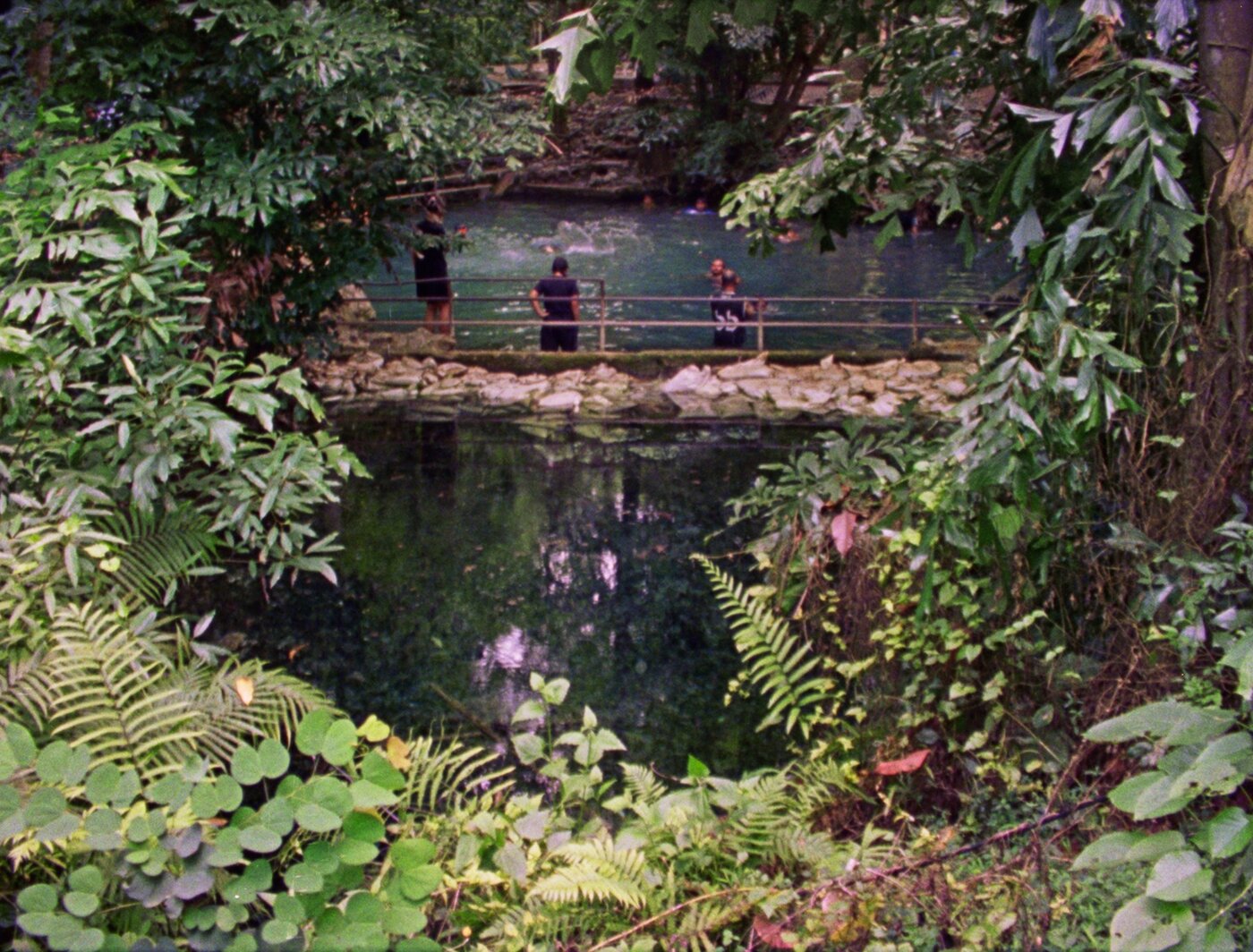
Beginning with shots of people swimming in a lagoon, Chulphuthiphong uses close-ups and distorted angles to confuse the viewer regarding what we are actually seeing. Some of the plants and mosses we witness are artificially grown, kept in terrariums. As with several other films discussed above, Microcosmic Orbit takes us behind the scenes as workers in a natural history museum organize and arrange plants, rocks, and lichens to produce exhibits that mimic “nature” but are not in fact natural formations. Chulphuthiphong reveals the process whereby “nature” is manicured, manipulated, and preserved. The irony is that “nature” would not be an object to preserve were it not for the human race’s endless reshaping of the earth, and the eradication of the very flora on display in this natural history museum.
In a sense, the exhibition space in Microcosmic Orbit presents the natural world like an argument: edited, assembled, and exhibited as a metonym, an example of something beyond itself. Chulphuthiphong also demonstrates the ways that cinema can participate in this argumentative process. This is a vital reminder. Memory isn’t neutral. It is subject to engineering, even by seemingly benign institutions. As so many of these films demonstrate, archival knowledge is partisan because those instigating enforced forgetting are also partisan. Filmmakers, then, must become archivists, because archivists represent a guerilla force in the war against memory.