When Hiram Johnson was elected the 23rd Governor of the State of California in November 1910, the Southern Pacific Railroad was so powerful that most people thought of it as the fourth branch of government. In his 1911 inaugural address, Governor Johnson referred to Southern Pacific as “the political master of this State.”
Johnson was a Progressive Republican, one of many who had broken with President Taft over high tariffs and conflicts over conservation, corporate regulation, and the influence of monied interests. As he put it in his inaugural address:
In some form or other nearly every governmental problem that involves the health, the happiness, or the prosperity of the State has arisen, because some private interest has intervened or has sought for its own gain to exploit either the resources or the politics of the State. I take it, therefore, that the first duty that is mine to perform is to eliminate every private interest from the government, and to make the public service of the State responsive solely to the people.
Johnson saw it as his mission to replace every appointee who represented a “political machine or a corporation” and bring in a new uncorrupted workforce, so as to confront the “apostles of big business.” He realized the result would bring “a storm of indignation,” but also, the liberty of a free people.
Governor Johnson’s election was not a blowout; he won by just 5 points. But by October, just 10 months into his governorship, he had persuaded the legislature to deliver him a package of constitutional amendments, establishing the statewide ballot process, the ability to recall public officials, women’s suffrage and, critical to this column, the strengthening of the Railroad Commission. And the legislature delivered the constitutional amendments by a vote of 35-1 in the Senate and 71-0 in the Assembly. California’s era of popular democracy had arrived.
Strengthening the Railroad Commission was a direct rebuke of the power and influence of Southern Pacific Railroad and transitioned the entirety of the Commission’s appointment authority to the Governor. The other central reform to the Commission was found in Section 51, the Commission’s “change of control” authority, which gave it new powers to approve any sale, lease, mortgage, merger or consolidation of any utility property.
In many ways, we still live in the California that Governor Johnson reinvented in 1911. The “change of control” authority first established in the Railroad Commission is now integrated in several agencies, from financial regulators to insurance oversight. In other ways, we don’t. No one would argue that the lofty ambition to rid government of every appointee with loyalties to private interests has endured as anything but an ambition. And yet, in many places across the country, including in some parts of California, last week’s midterm elections resembled a populist wave, not unlike the rebuke of corporate power that carried Johnson to Sacramento.
Then, on Wednesday of this week, an under-the-radar state agency, under the leadership of former Consumer Financial Protection Bureau Director Rohit Chopra, invoked its change of control authority to thwart a merger that had until then escaped condemnation of political leaders across the country. And it involved a corporation that was well known to late 19th- and early 20th Century progressives, Western Union, which had faced allegations of monopolizing the telegraph industry dating back to at least 1889.
But it is very much a scandal of 2026, and wed to the political climate of 2026. One week after an election were economic populism rippled across the country, a state agency was using the authority first established in the wake of a populist revolt over a century ago to confront corporate power.
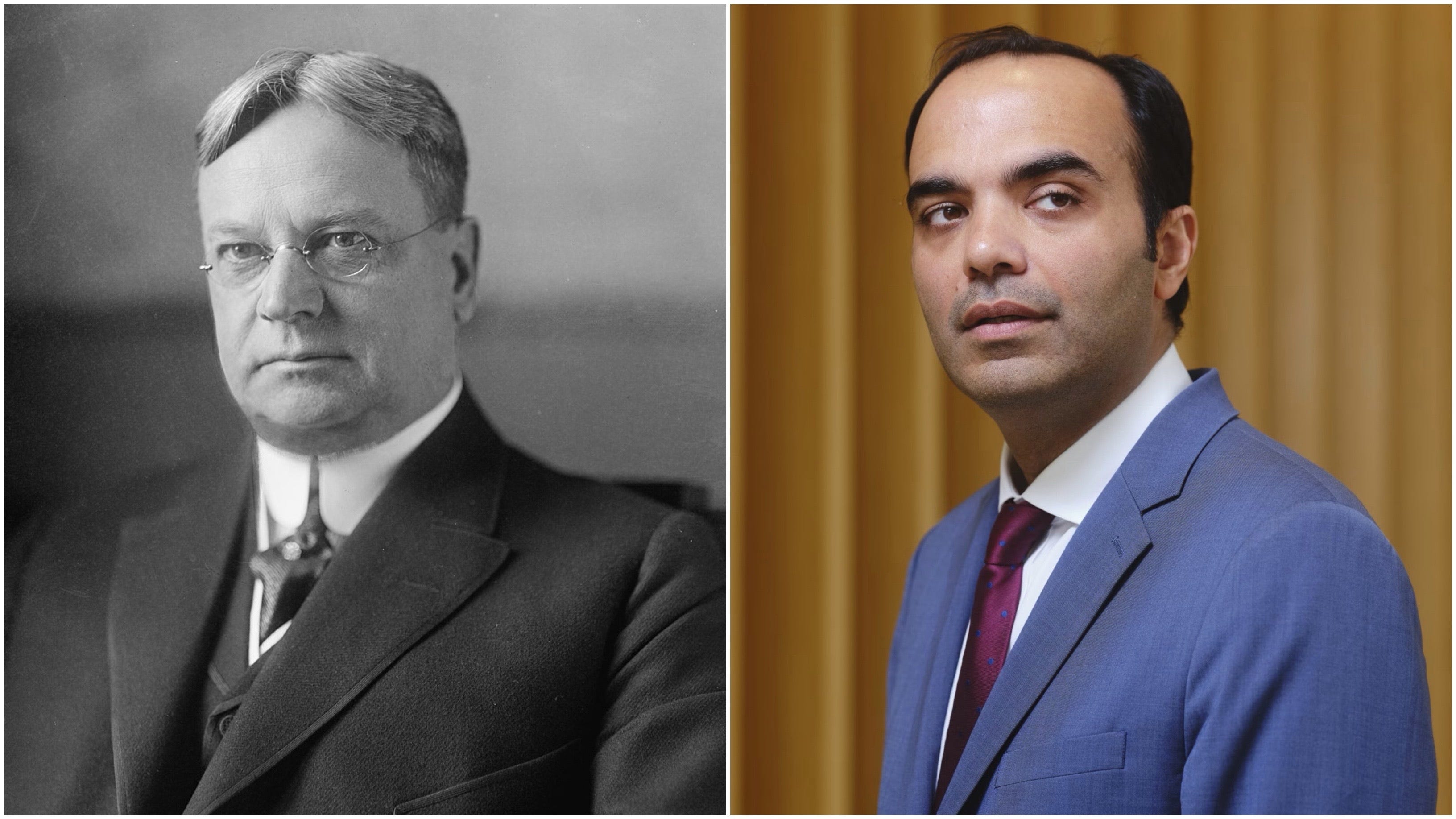
The parallels to the 1910 populist election wave and Governor Johnson’s creation of administrative merger controls are too enticing. Could this be the dawn of a new era in American politics? There are reasons to say yes, and perhaps more reasons to be skeptical. But one thing is clear: public officials at every level of government are waking up to new opportunities to serve the public. With the right attention, those opportunities might well become expectations — as envisioned by Governor Johnson — that government should be singularly committed to representing the public’s interest, free from the influence of private interests.
The Western Union-Intermex Merger
Last August 2025, Western Union announced an agreement to acquire International Money Express (Intermex) for approximately $500 million. What are these companies, and why did they want to merge? Western Union and Intermex are two publicly-traded companies that provide money transfer services, like the services provided by Venmo and CashApp. But whereas Venmo and CashApp primarily service domestic money transfers, Western Union and Intermex facilitate international money transfers.
Western Union is one of the world’s largest money transfer companies, whose customers – mostly individuals sending money to family, friends, and businesses – can transfer money domestically, internationally and across borders in more than 200 countries. Western Union makes money by charging a transfer fee and earns revenue from the foreign exchange spread when converting currencies.
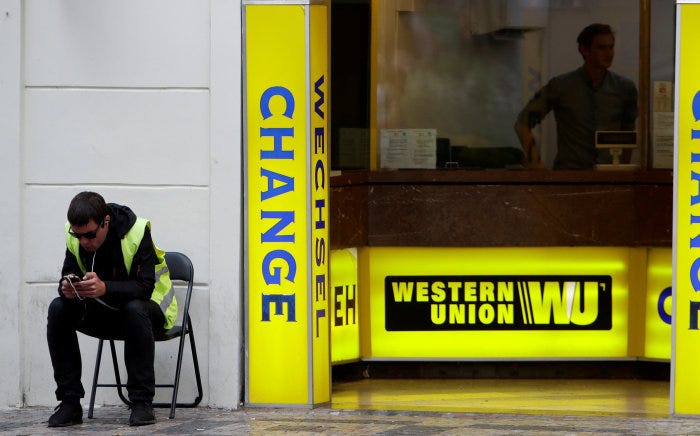
Intermex specializes in transfers from the United States to Latin America and the Caribbean. Like Western Union, Intermex’s customers send money across borders, and Intermex makes money by charging transfer fees and from foreign exchange spreads.
Another distinguishing characteristic of both Western Union and Intermex is that they both operate through retail locations, which requires having sprawling and robust partnerships with grocery stores, convenience stores, neighborhood businesses, and other independent retail agents. These retail partnerships are valuable in a merger transaction because, for services that rely on physical locations, it’s a pathway to automatic geographic scale without having to compete for those relationships on your own. And Western Union wanted Intermex’s robust network of retail partnerships to expand its own reach throughout Latin America.
Cross-border money transfers are also big business and are a vital resource to immigrants, in particular, who can use the services to transfer money back to their families. As former FTC Commissioner Alvaro Bedoya pointed out when this deal was announced:
Millions of people send money to help their family in Latin America. I've been sending money more or less monthly since I graduated law school almost 20 years ago. It's really important to have a range of companies competing for that business. When you're sending $35 or $50 to just get someone to their next paycheck (which is a pretty common thing), the fee for that can really eat at what you're sending.
So I'm pretty shocked to learn that Western Union is buying a company that *already* holds >30% market shares in U.S. to Ecuador and U.S. to Nicaragua remittances, and a 29% share in remittances to Guatemala. Intermex also claims to hold a 20% share in remittances to Mexico, and public reporting suggests that Western Union is #1 -- in other words, *above* Intermex -- in that corridor.
These types of transfers reach into the billions of dollars per year. In 2025, the New York Times reported that they had seen an uptick in international transfers attributable to heightened concerns around deportation caused by expanded and increasingly aggressive ICE enforcement. So the threat of retail locations closing down, or fees going up, was a source of particular concern for immigrant populations and other customers with family abroad. Here’s Mayor Zohran Mamdani earlier this year making the point, too:
It’s not every day that Mayors, even of major cities, are out front on merger issues, so Mayor Mamdani’s statement isn’t just compelling as it relates to this particular merger, but because it’s evidence that more and more cities are starting to think of themselves as agents in the organization of fair and competitive markets.
Now, cross-border money transfers are also used for less savory purposes. Since 2001, the U.S. Attorney of Pennsylvania had convicted dozens of Western Union agents for conspiring with international fraudsters to conduct mass marketing scams. And there’s a relevant connection to Secretary Chopra here, too. In late 2017, just a few months before Secretary Chopra was himself appointed to the Federal Trade Commission, Western Union was investigated by the FTC and agreed to disgorge $586 million after admitting to crimes like failing to stem money laundering schemes and aiding and abetting wire fraud. Fast forward a few years, while Chopra was serving as Director of the CFPB, that agency warned Western Union and other remittance services they should not charge potentially illegal junk fees. This was not Chopra’s first encounter with Western Union or Intermex.
Since 2025, the Trump Administration has slowed or eviscerated this oversight work. In August 2025, right as Western Union was announcing its intent to acquire Intermex, Trump’s CFPB was cutting its oversight of international money transfer services. When the Western Union acquisition of Intermex came before Trump’s FTC in late 2025, the merger didn’t get so much as a second look.
That could have been the end of the story. But it wasn’t.
Enter the States
Here’s where things get interesting, because federal agencies weren’t the only ones with authority to review the transaction. State level financial regulators, like those in New York and California, also had authority to review the acquisition under their respective change of ownership regulations. And following the election of Mamdani in New York City, the deal started encountering turbulence, as the mayor called on the State’s Department of Financial Services to review the merger.
New York financial regulators, in collaboration with NY Attorney General Letitia James, ultimately approved the merger on August 13, 2026, subject to various commitments made by Western Union. Those conditions included maintaining all of the combined company’s retail locations throughout the state, continuing to offer remittance services to key Latin American countries, and capping fee increases, all for a period of three years following the acquisition.
California financial regulators had also provided tentative approval to the deal in February 2026, with a built in clock to allow other regulators to review the deal. But the same day that New York DFS approved the Western Union-Intermex deal, newly-appointed California Secretary Chopra, who oversees the State’s equivalent financial regulator, suspended its approval of the merger. The stock prices cratered.
Help us annoy Wall Street and Silicon Valley by subscribing to this newsletter. BIG is a reader-supported outlet focused on the politics of monopoly and finance. We love that you are reading, and we hope you will continue. With the recent election, the work of promoting a government that takes on monied interest will become far more potent. Every additional paid subscriber means we can invest in more education for leaders and citizens, and annoy Wall Street just that much more. So please, subscribe. And together we’ll pop the damn AI Bubble. Or at least, we’ll have fun trying.
California’s authority to review the Western Union-Intermex deal derives from its licensing regime, which requires anyone who engages in the business of money transmission to be licensed by the state. Critically, the law also requires the Department of Financial Protection and Innovation (DFPI) to approve or disapprove any acquisition of a licensee, which includes the power to impose conditions in furtherance of the “safety or soundness” of the licensee, or to enhance consumer protection. That change-of-control authority is a direct descendant of Governor Johnson’s 1911 expansion of the Railroad Commission.
Fast forward to Tuesday of this week, and California’s DFPI announced that it would allow Western Union to acquire Intermex, but, as in New York, subject to some conditions. Like New York, California prohibited Western Union and Intermex from shutting down agent locations. Then, California went further in a couple of ways. First, Western Union would be required to adopt anti-fraud and anti-money laundering measures. That’s basic consumer protection, anti-crime stuff, if not also a call-back to Chopra’s encounters with Western Union and other remittance services during his time at the FTC and CFPB.
California financial regulators also required Western Union and Intermex to continue operating, at least partially with respect to a consumer’s ability to choose between their preferred agents, as separate entities. This condition reflects the state’s authority to preserve competition, too, and to make sure that consumer choice is not sacrificed, even if Western Union and Intermex are integrating other back-end functions.
Imposing conditions on a licensee has the valence of regulation. And the authority to impose conditions is expansive. Operating within the bounds of its statutory authority, the conditions imposed by DFPI did not resemble a negotiation with private interests, like a mutually-agreed upon consent decree, but were principally about protecting consumers, preserving market competition, and enhancing the public interest by whatever means necessary.
However one thinks of it, for Western Union, the prospect of not doing crime was apparently a raw deal, and Western Union pulled out of its deal to acquire Intermex the next day. Western Union was not specific as to why, but deemed the conditions “unacceptable,” adding that they “would have required material changes to Western Union’s business model.”
Part of me is skeptical that Western Union was actually frustrated by the conditions, because I don’t see the conditions as anything more than rational mitigation of the public risk flowing from the combination. While Intermex shareholders were no doubt looking forward to the payout of a deal, Intermex seems to be similarly flummoxed by the termination and is demanding Western Union take all steps necessary to consummate the deal subject to DFPI’s terms.
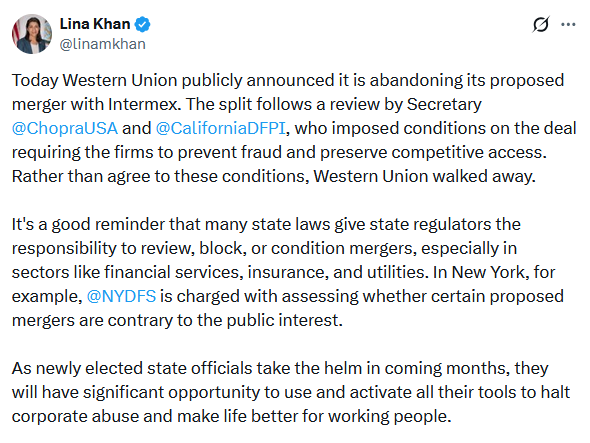
So there may still be a thorny road ahead for Western Union and Intermex. In the meantime, here’s former FTC Chair Lina Khan celebrating the outcome:
People-First Deal-Blocking at the State Level
Khan’s final statement is one to sit with: “As newly elected state officials take the helm in coming months, they will have significant opportunity to use and activate all their tools to halt corporate abuse and make life better for working people.” While a lot of people are focused on the change of control in Congress, on a Federal level there is still split government. It is at the state and local levels where more nimble governance can actually occur.
You can hear in Khan’s comments, urging state legislators to “use and activate all their tools,” the echoes of Governor Johnson’s clarion call from 1911. And many state agencies are now possessed of the authority to oversee mergers and other changes in control that Johnson first established in the state’s Railroad Commission. These kinds of authorities exist across states and cities that are now controlled by populist Democrats. In 2026, a dozen state legislative chambers flipped from red to blue, and a host of administrative positions, from the Ohio Attorney General to the Texas Agricultural Commission to the Georgia Public Service Commission, are now run by populists, many of them operating outside the polarization of left-right politics. I could easily imagine state and city regulators all over the country reaching out to block or regulate mergers like the DoorDash-Instacart transaction.
I know California best, so that’s what I’ll speak to. In this state, the California Public Utilities Commission can block a person or corporation from directly or indirectly merging with, acquiring, or controlling a California public utility without prior authorization of the Commission. That authority extends to entities organized outside the State of California, and requires the Commission to consider things like ratepayer interests, service quality, and impacts on workers and local economies. There’s a specific provision stating that ratepayers must receive at least 50% of forecasted benefits of any transaction.
The State’s Department of Managed Healthcare and Department of Public Health are similarly authorized to review and block material changes involving health insurance plans and the sale of hospitals, skilled nursing facilities, and other licensed facilities. Similar merger controls exist under the Department of Cannabis and the Department of Alcohol and Beverage Control, and they also fall under Secretary Chopra’s purview. Veterinary practices, private cemeteries, pharmacies, and automotive repair businesses do, too.
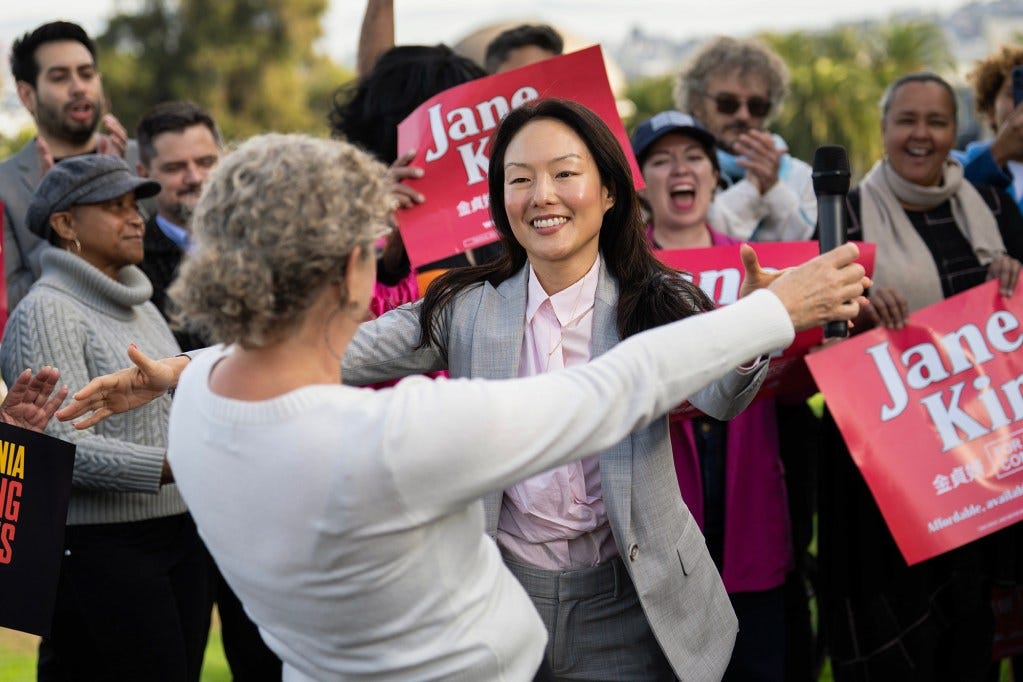
The California Insurance Commissioner oversees changes in control of insurance providers. In California, the Insurance Commissioner is an elected statewide seat, and voters just elected another populist, Jane Kim, to the role.
State legislatures are also expanding this authority, interestingly not under the guise of expanding antitrust law, even though this type of oversight can serve the same pro-competition and consumer protection ends. California recently passed a law requiring licensure of small business lenders, an attempt to give DFPI more authority to oversee usurious merchant cash advance providers. If you want to be genuinely outraged at the perversity of merchant cash advances, take a look at this recent report by Protect Borrowers.
The bottom line is that economic fairness, consumer protection, and the general welfare of workers, consumers and small businesses in the face of increased corporate concentration is not just a litigation or enforcement project. It is woven by law into the oversight obligations of little-recognized bureaucrats. Some of them are captured by the industries they are commissioned to oversee. Others are more likely to heed the call to advance the public interest through whatever means necessary, untethered from the influence of private interests. They will face blowback for doing so, from business and from the press, but as Governor Johnson recognized, that’s the obvious price for the pursuit of government by and for the people.
As for Governor Johnson, that was a successful political calculation. The rift within the Republican Party between Taft and the insurgent progressives cost them the Presidency in 1912. But Johnson would become the first Governor in California history to serve two consecutive terms in office. He would go on to serve four terms in the United States Senate. At an inflection point in California’s history, he governed hard and fast, leaving a legacy that just this week scored another win for Californians and Americans more broadly.
Thanks for reading! My name is Lee Hepner, I’m a guest-writer for BIG while Matt is out on paternity leave. Your tips make this newsletter what it is, so please send tips on weird monopolies, stories I’ve missed, or other thoughts. And if you liked this issue of BIG, you can sign up here for more issues, a newsletter on how to restore fair commerce, innovation, and democracy. Consider becoming a paying subscriber to support this work, or if you are a paying subscriber, giving a gift subscription to a friend, colleague, or family member.
cheers,
Lee Hepner