The vibes in AI world are bad. After November 3rd ushered in the biggest nationwide electoral victory for Democrats since the Watergate era, tech stocks tanked. Many Democrats had campaigned against data centers and for AI regulation, and investors responded accordingly, worrying about a clampdown on the AI free-for-all of the last couple years. Data centers might be harder to build, some will be cancelled altogether. Maybe AI companies would find themselves liable for their products. Maybe.
Quick note: I can only do this writing and reporting thanks to you readers. Specifically, the small number who chip in a few bucks a month to help me keep the lights on, and keep the bulk of this writing free for everyone else. Thank you thank you to all those who do so already. To those who don’t, if you find value here, please consider upgrading to a paid subscription to support this newsletter, the podcast, and the whole bloody project. Onwards.
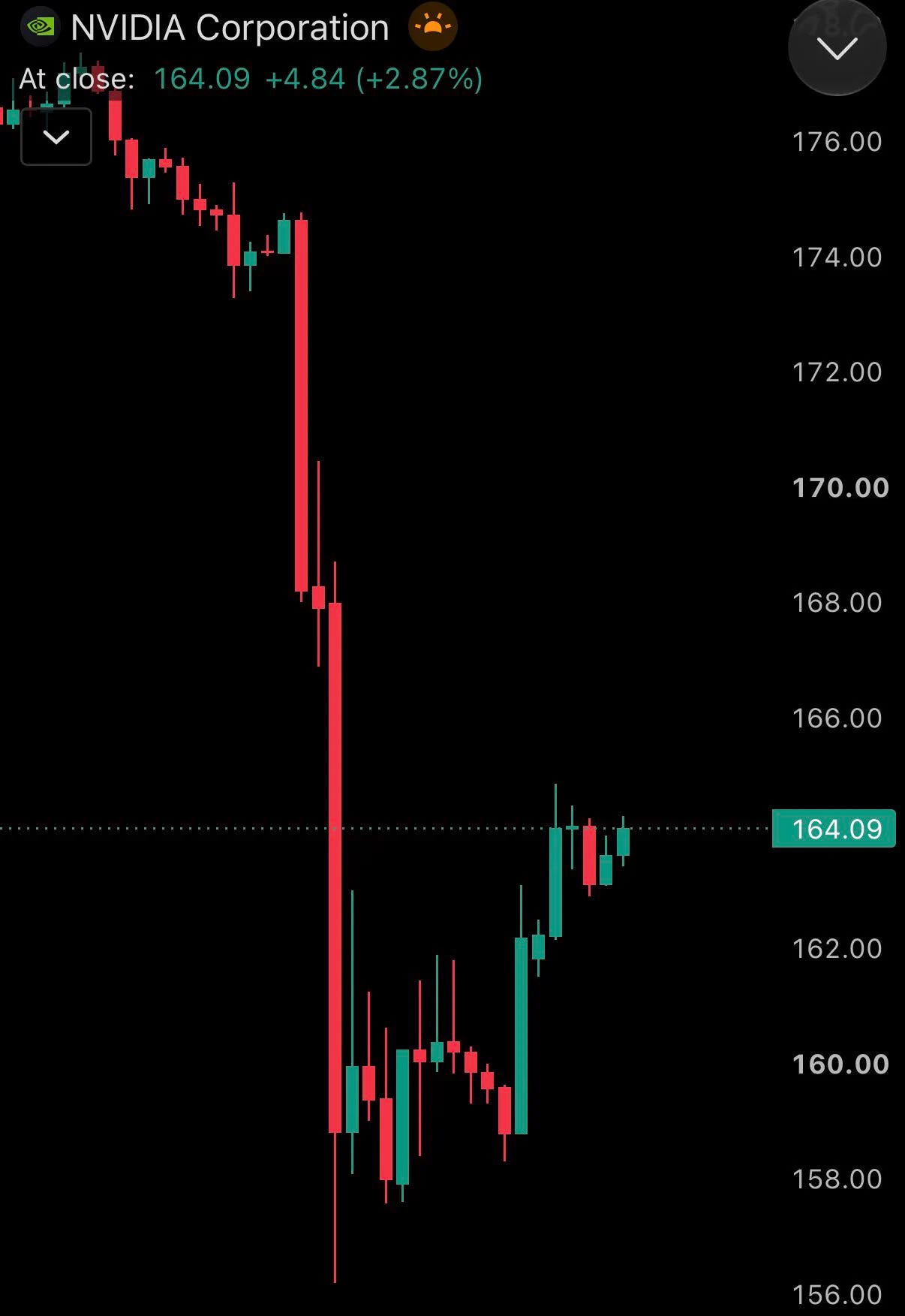
Just as soon as the markets began to stabilize, along came word of now-former Nvidia CEO Jensen Huang’s affair with a Chinese spy. Huang, arguably the single most central figure to the AI industry, had what appears to be multiple affairs, potentially divulging industry and state secrets in the process. He resigned after the revelations came to light. Again stocks wobbled. Shares of Nvidia dropped enough to wipe out half a trillion dollars before recovering some.
Despite the dip in industry fortunes, executives at the top AI startup Anthropic hit the road, pitching its forthcoming IPO to investors. Here’s a now-widely circulated clip from that roadshow video, in which CEO and co-founder Dario Amodei claims that his company is about to usher in an “age of miracles” and turn mental illness, heart disease and cancer into relics of the past. Step right up, investors, behold wonders the likes of which until now could be found only in your wildest dreams.
What strikes me about this presentation is Amodei’s sweaty desperation. He’s frantically making the case, in a prerecorded video, no less, that a) despite its terrible reputation and unpopularity, AI is still the future of everything, that b) only an ethical company, specifically his, can be entrusted to vanguard that future, and that c) you too will become extremely rich when Anthropic succeeds, if you buy in now.
On socials, people have been comparing it to Elizabeth Holmes’s pitch for Theranos’s blood-testing technology, even if ‘we can test for every single disease with a drop of blood’ is actually a pretty tame promise compared to ‘AI will cure every single disease’. Amodei is following in Sam Altman’s footsteps yet again here; just a few months ago, the OpenAI chief promised that their AI was close to becoming a “genie” that can “grant any wish.”
It’s starting to feel pretty thin out there. Worse than that. Worse than just lazy and condescending, too, given that this is how a child might describe the super cool invention they just made up. It will give you anything you want, it will cure cancer, and actually not just that but every single disease even. They’re not even trying. The automaton carnival busker vibe and lazy moonshot promises are nothing new, sure, as AI has always relied upon a certain kind of smoke and mirrors. But nearly four years into the boom, and this is still where we are? The lazy repeated promise that a cure for cancer is right around the corner?
To that end, I would say that we should find it pretty notable that the leading pitch for AI in the run up to the industry’s IPO season is not “we have revolutionized business and saved companies billions,” primarily because that hasn’t really happened. The AI industry’s record on improving productivity and effectively automating labor has been spotty, to say the least. We have vibe-coding and software automation in tech and some other fields, and that is not nothing. We have addictive chatbots with ads. We have mom and pop shops churning out slop. But we evidently don’t have much that AI CEOs want to point to in the here and now for their IPO pitchmaking, or as evidence of demonstrable economic gains in, say, workplace productivity or, maybe, leaps in medical science. Otherwise, they would, you know, be pointing to it.
As ever, the half-baked visions of grandeur work to help conceal that, if anything, 2026 has been the year of reducing AI spend (Apple was the headline-making company cutting back on AI last week), rehiring employees fired by overzealous AI-happy bosses, employees hating on AI in the workplace, and students booing what it means for their futures. That and a bunch of felony hacking incidents for which the AI companies are directly responsible for.
The gap between the continually promised all-powerful cancer-curing AI and “something that mostly makes most ordinary people’s lives a little bit worse, more anxious, and more annoying” has in many ways never felt more yawning. It certainly does not help that a historically unpopular administration keeps bleating about how AI is no longer AI but SI, or Super Intelligence, even in circumstances that render such a supposition facially comical.
Yes, when a reporter asked if the FAA grounding all flights for just the second time since 9/11 had anything to do with a faulty AI system, Homeland Security Secretary Markwayne Mullin replied “We call it SI around here.”
It’s the name, the brand, the pitch that matters, not the beleaguered infrastructure. The thin and thinning promise that is growing hazier, more absurd. Genies, cancer-curing, super intelligence. When the FAA shuts down the nation’s airports, Americans assume that AI is somehow to blame. Ditto with the widespread Microsoft cloud outage; did the company lay off too many engineers, assuming AI could pick up the slack, to ably solve the problem? That was the first thought most of us had. No one expects a cure for Alzheimers, we expect service outages and grounded planes.
And at the center of this curdling vision was Jensen Huang, a man who for so long was the chief shovel salesman during the AI gold rush. Huang kept all plates spinning by selling chips to the companies who supplied AI compute and by investing in companies that needed to buy those chips, and thus did more to create the infamous circular financing structure that comprises the core of the AI economy than anyone else. A man who was notably less ideologically interested in questions of AI super-intelligence and x-risk who comparatively and refreshingly simply wanted to sell as much of his product as possible and wear some age-inappropriate leather jackets while doing so.
Here’s the New York Times:
“Nvidia is the central bank of A.I. and all of a sudden, the Fed chairman is out,” said Tomasz Tunguz, an investor at Theory Ventures, which funds young start-ups.
Nvidia held $48 billion worth of stakes in 229 private companies, including large stakes in OpenAI and Anthropic, at the end of July, according to securities filings. It more than doubled its start-up investments in six months.
Now, with Huang out, it’s feasible that all of those interconnected relationships continue to be managed well enough, that the AI startups get the investment they need from Nvidia to buy Nvidia chips to run their companies with, that the next CEO continues to find new markets to move more merchandise into and to talk Trump and whoever comes next into exempting export controls and so on.
It’s also feasible that without Huang’s particular brand of financial and technical engineering and singular founder mystique, the foundation of an already thinning story about AI begins to show cracks. Other investors might not be as eager to join a Huangless Nvidia in backing unproven new AI enterprises; the government might clamp down on those chip exports, especially given the spy revelations, and not cut the next, leather jacket-free CEO as much slack. Without Nvidia’s largesse, certain startups and neocloud companies might suffer, even fail, distressing data center projects in the process.
I know better than to predict the beginning of the end for the AI bubble, or even the beginning of the beginning of the end. But it’s hard to look at the thoroughly destabilized and perennially over-leveraged AI industry and not see signs of trouble brewing. I see an industry awash in bad vibes, confronted by mass cultural and political backlash, desperately making the same empty utopian pitches it has for years on end, with a new raft of pressing economic questions and without one of its key foundational operators to help answer them.
I see a thinning pitch for genies and miracle cures, huffed out by AI execs over the broadening din of dysfunction.
Here’s last week’s breakdown of What The Election Meant with some very smart tech politics watchers, in case you missed it:
THIS SUNDAY I will be at Pomona College for a screening of a film produced by some folks involved in the Summer of Ludd. There will be a Q+A after the movie, and a SHITPHONE protest with some local Luddite Club organizers beforehand, at 5:30 PM. Come on out.
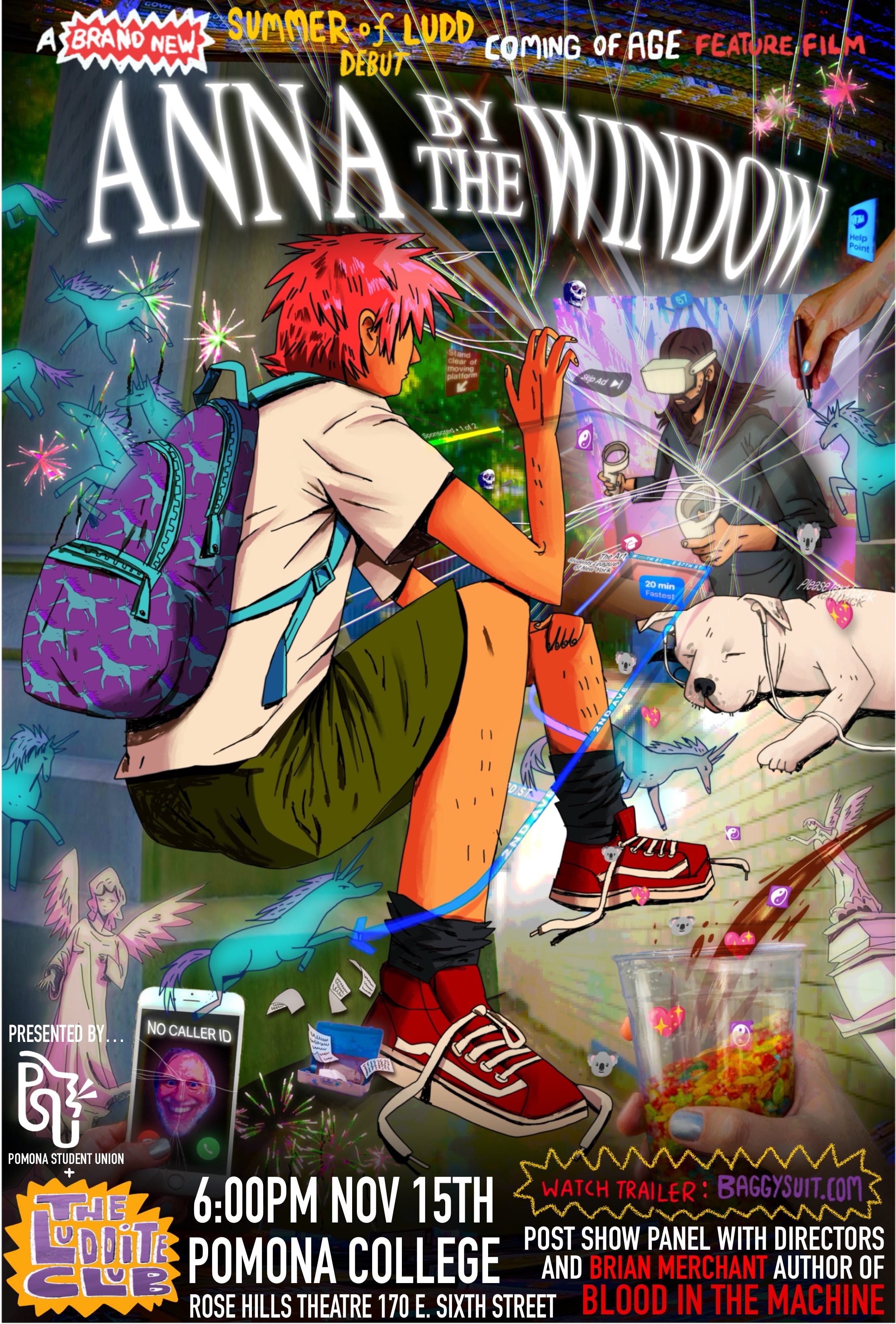
More on the film here:
After premiering at The Summer of Ludd, Baggysuit’s feature film Anna by the Window — a coming of age tale about a listless teenager who goes to New York City to reconnect with his estranged older brother, the erratic founder of an AI start-up — is coming to the West Coast! Screenings will be at theatres and community spaces in The Bay from 11/5-11/9 and in LA from 11/11-11/15 presented alongside The Luddite Club, Blood in the Machine author Brian Merchant, animator Victoria Vincent, and conversations about getting off Big Tech. Find tix near you here, and check out the trailer here!
Schools Beyond Screens
On Wednesday, which apparently Veteran’s Day, the kids were off school, so we took them down to a protest put on at the Google Venice office put on by Schools Beyond Screens, where a small but spirited band of demonstrators were calling out the search giant for pushing its AI products on classrooms.
Relatedly, I dropped by a talk at UCLA for the New York Times reporter Natasha Singer’s new book, Coding Kids: Big Tech’s Battle to Remake Public Schools, and it could not be timelier. I look forward to digging into, it looks great.
OKOK that’s it for now; no podcast this week, as I was absolutely dead from travel. Next week will be a good one though, I can tell you that much right now. Until then, keep those hammers up.